
The 500 Dollar Risk: Abbotsford False Alarm Bylaw Explained for 2026
The Abbotsford False Alarm Bylaw mandates steep fines for commercial properties that trigger repeated police dispatches without a valid cause. Under the fee schedule, businesses receive a warning for the first three false alarms but face a 300 dollar fine for the fourth through ninth instance.
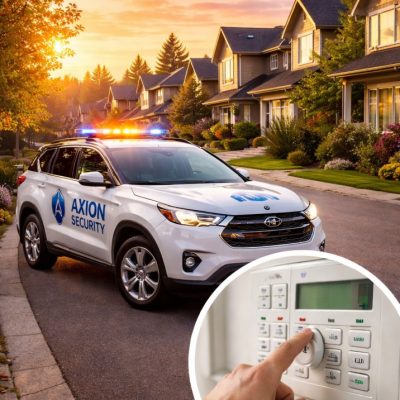
If a property reaches ten or more false alarms within a calendar year, the fine increases to 500 dollars per call. Axion Security helps Abbotsford business owners avoid these penalties through Verified Response services that confirm a threat before police are notified.
The New Reality of Alarm Monitoring in the Fraser Valley
The City of Abbotsford has a strict tiered fine structure for false alarms to reduce the strain on the Abbotsford Police Department.
This regulation ensures that businesses take responsibility for their security systems, preventing unnecessary police dispatches that cost the city thousands of dollars in wasted resources.
For a local business, the transition from a minor technical glitch to a major financial penalty can happen in a single week.
The city defines a false alarm as any situation where a security system triggers a police response but no evidence of an unauthorized entry or criminal act is found. This includes errors caused by faulty equipment, environmental factors like wind, or simple mistakes by employees.
To understand the legal framework behind these penalties, business owners should review the official City of Abbotsford Fire Prevention guidelines, which outline how municipal services prioritize emergency calls.
Breaking Down the Commercial Fine Schedule
The bylaw distinguishes between residential and commercial properties, with business locations facing significantly higher financial risks. The goal of this structure is to move property managers away from passive monitoring and toward more professional, verified standards.
Number of False Alarms | Commercial Fine Amount | Penalty Category |
1 to 3 Alarms | 0 Dollars | Warning Period |
4 to 9 Alarms | 300 Dollars per call | Tier 1 Penalty |
10 or more Alarms | 500 Dollars per call | Tier 2 Penalty |
This tiered approach means that a warehouse in the Matsqui Industrial Area or a retail shop at Highstreet Shopping Centre could face thousands of dollars in debt if they do not address system errors immediately. These fines are often added to the property tax roll, creating long term financial complications for the property owner.
Why Passive Systems Fail Local Businesses
Traditional security models rely on a basic sequence: a sensor trips, a signal goes to a monitoring station, and the monitoring station calls the police.
This model is reactive and prone to high error rates. In contrast, the current market demands a more sophisticated strategy. You can read more about how this shift is happening in our guide on proactive loss prevention for businesses.
Axion Verified Response as a Strategic Buffer
Axion Security fills the gap between your security system and the police department. Our Verified Response service acts as a strategic filter.
Instead of the alarm signal going directly to the police, it is routed to our professional team. We then use high resolution video monitoring or a rapid mobile patrol dispatch to confirm the situation on the ground.
If the alarm is false, we secure the premises and inform the owner without ever involving the police. This prevents the incident from being logged as a false alarm by the city. If we confirm a crime in progress, we contact the police with an eyewitness account.
This type of verification is highly valued by the public sector. You can explore how we coordinate with municipal entities in our overview of government and municipality security services.
Geography of Risk: From Clearbrook to Sumas
The risk of these fines is spread across all sectors of the city. Industrial facilities near the Sumas border and commercial plazas in Clearbrook are particularly vulnerable.
Large buildings with older infrastructure often suffer from technical glitches that trigger alarms during power fluctuations or extreme weather.
Business owners near the Abbotsford Centre or Sevenoaks Shopping Centre must ensure that their security protocols are updated to meet the 2026 standards.
As crime trends shift across the Lower Mainland, having a security partner that understands local bylaws is a critical advantage.
This localized approach is part of the new era of data driven security that we will explore in our upcoming February analysis of VanStat and regional crime mapping.
Actionable Advice for Abbotsford Business Owners
To protect your business from these escalating costs, follow these three essential steps:
- Update Your Hardware: Ensure your alarm system is inspected by a professional technician at least once a year. Replace old batteries and calibrate sensors to ignore small animals or environmental movement.
- Implement Staff Training: User error causes a large percentage of false dispatches. Conduct a training session for every employee who has access to the alarm codes. Ensure they know how to cancel a false alert before it reaches the monitoring station.
- Switch to a Private Response Model: Consider using a private guard response such as Axion Security’s mobile patrol, for the first point of contact. This ensures that the police are only called when a threat is confirmed, keeping your property off the high frequency penalty list.