Accountability in Loss Prevention: Why Axion Security Puts Skin in the Game
Most security companies collect invoices. Axion Security owns outcomes.
Every security company will tell you they care about their clients. It is the easiest thing in the world to say. The harder question is what happens when something goes wrong. Not a hypothetical. An actual incident where the service fell short and the client was the one who paid for it. How a company responds in that moment tells you more about who they are than anything on their website ever could.
The Industry Standard: Silence and Fine Print
If you manage a retail location and you have worked with security providers before, you already know the pattern. The contract is signed. Guards are deployed. And when an incident happens where the service did not deliver, the provider points to the contract language and sends the invoice on schedule as though nothing happened.
That response is not unusual. It is the norm. Most security companies in British Columbia operate on a model where accountability ends at deployment. Once the guard is on-site, the provider considers the obligation fulfilled regardless of what happens on the floor. The client absorbs the loss, absorbs the frustration, and accepts that their security vendor is a billing relationship, not a partnership.
What Accountability Actually Looks Like
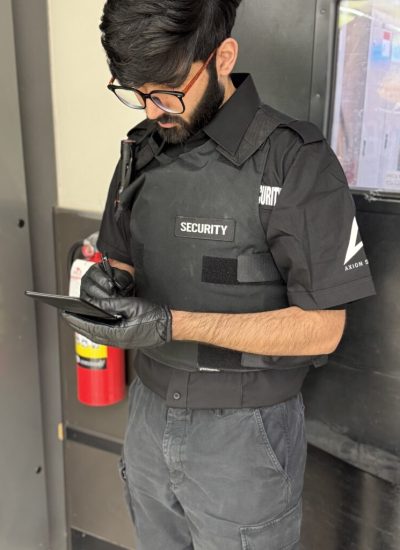
At a FreshCo location in Powell River, an Axion Loss Prevention Officer was on duty when a shoplifter managed to slip away from the store with merchandise. It was a rare occurrence. In the entire history of Axion’s operations across British Columbia, it had only happened once. But it happened, and it cost the client.
What Axion did next is what separates them from the rest of the industry. Rather than pointing to contract terms or treating the incident as an unavoidable cost of doing business, Axion immediately reduced the client’s invoice for that month to cover the loss. No dispute. No back and forth. Axion identified the shortfall, took ownership, and made it right before the client had to ask. This is the #AxionDifference
Why This Matters for Retail Managers
A single incident does not define a security program. But how a provider responds to that incident absolutely defines the relationship. Retail managers evaluate security vendors on results, and rightfully so. But results are only part of the picture. The other part is trust, and trust is built in the moments when things do not go perfectly.
Most providers will never volunteer accountability. They will send the same invoice regardless of performance. They will reference the terms of the agreement and remind you that loss prevention is about risk reduction, not elimination. All of that is technically true. But none of it helps the store manager who just watched merchandise walk out the door while a contracted guard was on shift.
Axion’s response at Powell River was not a goodwill gesture. It was a reflection of how the company operates. When Axion commits to protecting a client’s assets, that commitment comes with financial accountability. If the service falls short, the client should not be the only one absorbing the cost.
Store the Community Trusts Again
One of the most significant outcomes at Canadian Tire had nothing to do with the numbers. The store’s perception in the community has improved. When security officers treat people with respect even during a detention, it sends a message about the kind of business the store is. Customers feel safer. Staff feel supported. The environment shifts from tense to professional.
That reputation matters more than most operators realize. Retail locations live and die by community trust, and a single aggressive incident caught on a phone camera can undo years of goodwill overnight. Axion’s approach eliminates that risk entirely while still delivering the loss prevention results the business needs to protect its margins.
Skin in the Game Changes Everything
When a security provider is willing to put its own revenue on the line, two things happen. First, the quality of service goes up. Officers who know their company stands behind their performance carry themselves differently on the floor. The training matters more. The attention to detail matters more. Every shift matters because the provider has made it clear that outcomes are not optional.
Second, the client relationship fundamentally shifts. It stops being transactional and starts being collaborative. The provider is invested in the result. That alignment of incentives is rare in the security industry, and it is the foundation of every client relationship Axion builds.
Security That Stands Behind Its Work
Axion Security Services provides professional loss prevention officers to retail locations across British Columbia, backed by a commitment to accountability that goes beyond the contract. If you are looking for a provider that owns outcomes, contact Axion Security to start the conversation.