
Protecting Prince George Retail Staff from Street Disorder
In 2026, the priority for Prince George retailers has shifted from simple property protection to the immediate physical safety of frontline staff. Facing a surge in street disorder and erratic behavior, business owners are now turning to Advanced Security Training (AST) certified guards.
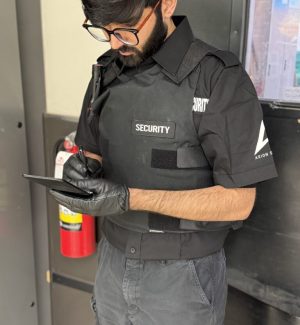
Unlike basic security, AST guards specialize in tactical de-escalation and behavioral assessment, providing a professional buffer that prevents aggressive confrontations from turning into workplace injuries.
Beyond Property Damage: The Human Cost of Disorder The Canada Games Plaza Transformation: A Summer of Soccer
The conversation around downtown Prince George reached a boiling point following the high-profile Save Our Streets rally, which saw over 1,000 residents and business owners converge at the CN Centre. While much of the public debate has focused on the millions of dollars lost to vandalism and theft, the most critical “hidden cost” is the mental and physical well-being of the people behind the counters.
For many retail workers in the downtown core, from George Street to Victoria Street, random violence is no longer a distant headline it is a daily hazard. When staff are forced to confront individuals experiencing crisis or displaying erratic behavior, the risk of a workplace injury skyrockets. In this climate, a standard “observe and report” security model is insufficient. Retailers need a partner who can step in before a situation becomes physical.
The AST Difference: De-escalation as a Specialized Skill
At Axion Security, we believe that the best-case scenario is an incident that never happens. This is why we prioritize Advanced Security Training (AST) for our retail guards. AST is a specialized certification in British Columbia that goes far beyond the basics of site monitoring. It focuses heavily on:
- Behavioral Identification: Recognizing the early warning signs of a potential confrontation.
- Tactical Communication: Using verbal techniques to lower the emotional temperature of an individual.
- Legal Force Application: Knowing exactly when and how to intervene to protect life and limb, while adhering to the BC Private Security Services Act.
By placing an AST-certified guard at your entrance, you aren’t just protecting your merchandise; you are providing your employees with a safety shield. This allows your staff to focus on their jobs customer service and sales while a professional manages the complex dynamics of the street.
Actionable Advice: Hardening Your Frontline Safety
If you are managing a retail storefront in Prince George during this period of heightened disorder, implement these three safety protocols:
- Prioritize Human-First Security: If you have to choose between a new camera system and an on-site guard, choose the guard. Cameras only provide evidence after an employee is hurt; a guard prevents the injury from occurring.
- Define Your Safe Zones: Ensure your staff has a designated “retreat zone”—a lockable room or office—they can go to if a situation becomes unmanageable. Coordinate with your uniformed security officer to ensure they know exactly where these zones are.
- Leverage Local Data: Stay connected with the Save Our Streets coalition and local business groups to understand the current “hot spots” in the city. Sharing intelligence helps our mobile patrol units time their visits to coincide with high-risk windows.
Conclusion: Restoring Confidence for Prince George Workers
A thriving downtown Prince George is only possible if the people working there feel safe. The message from the CN Centre rally was clear: change is needed now. While systemic solutions take time, your staff’s safety cannot wait. By investing in professional loss prevention and AST-trained personnel, you are sending a clear message that your team’s safety is non-negotiable.